
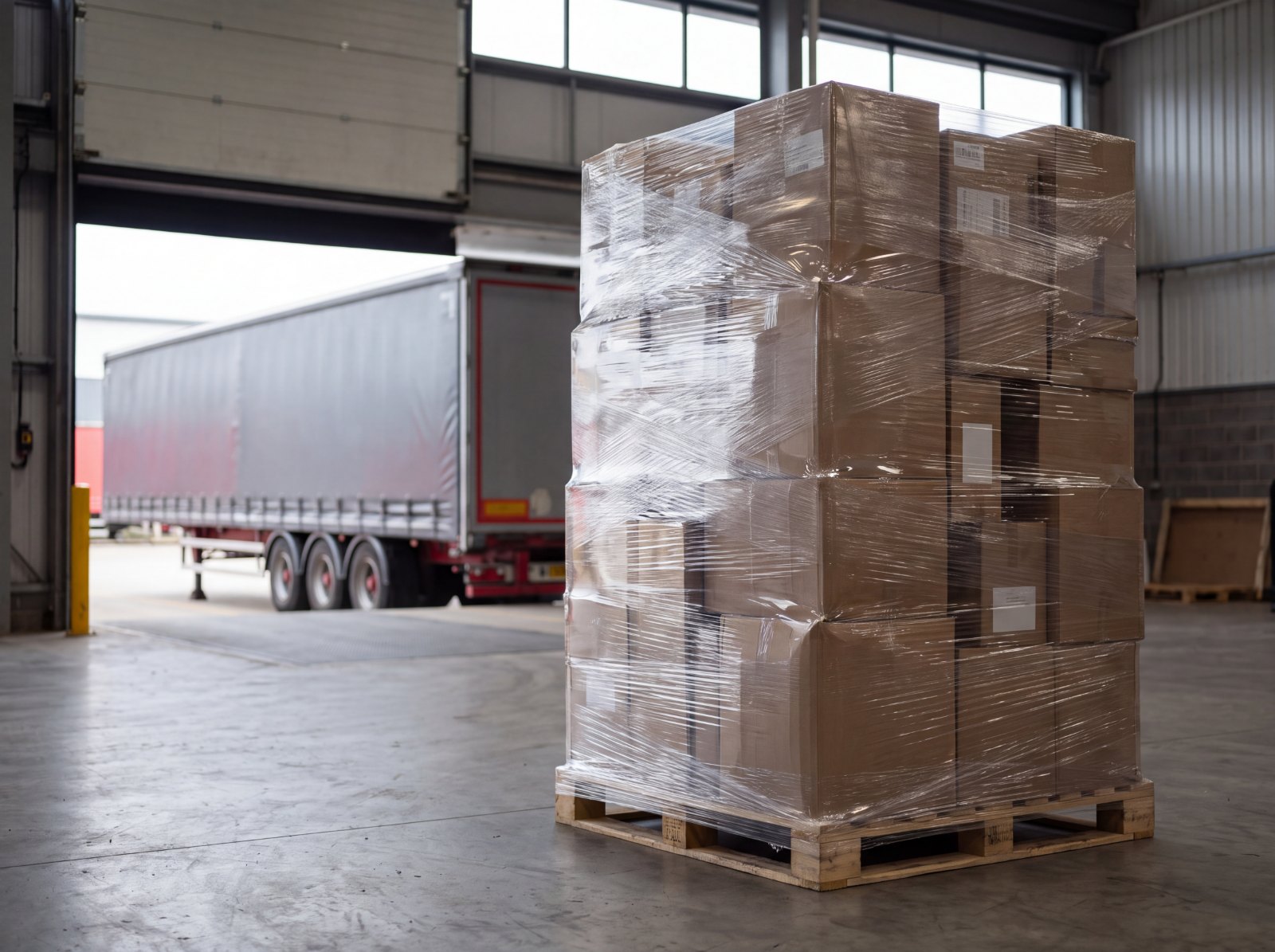
Pallet loads that arrive the way they left.
A pallet that fails in transit costs far more than the film that should have held it: damaged stock, a second delivery, a credit note, and a customer who remembers. We measure how your loads are wrapped on your machines, find where they could fail, and prove the fix on your own line.
Load stability, film per pallet, pre-stretch and wrapper settings, measured on your loads, your machines and your conditions.
Book your free benchmark
We’ll visit, measure how your pallets are wrapped today and show you where loads could fail. It’s free, with no obligation, and your trial order is sale-or-return.
We’ll only use your details to respond to your enquiry. See our privacy policy.
Prefer to talk? Call 01795 430 064.
The film is the cheapest part of the problem.
Get the wrap right and everything after it, from the trailer to your customer’s dock, costs less.
The cost that isn’t on the invoice
Your customer’s first impression
A leaning or collapsed pallet at their dock is what they remember about your business.
Turned away at the door
Distribution centres can refuse loads that look unstable or damaged, leaving you to pay for the trip back.
Contracts at risk
Repeat damage claims make you the supplier who’s hard work, and that counts when contracts are reviewed.
What we check on your pallets
Everything that decides whether a load arrives intact. An animal feed producer got 27% more load holding from a single wrap after its benchmark.
| We measure | What it tells you |
|---|---|
| Load stability | How firmly each load holds its shape under braking, cornering and handling |
| Containment | How tightly the film grips the load and locks it to the pallet |
| Wrapper settings | Pre-stretch, wrap pattern and film tension on your machines |
| Film per pallet | The weight and cost of film on every pallet you send |
| Rotations and wrapping time | How many turns and how long each pallet takes |
| Yearly cost | The total cost per pallet, not just the price per roll |
| Plastic tonnage | For your Plastic Packaging Tax and EPR reporting |
Free, with no obligation. Most benchmarks take a single visit.
- On your site, on your own line
- Your current film benchmarked first
- Alternatives trialled side by side
- A written report on cost and stability
- Sale-or-return trial order
Thinner film isn’t always the answer. Some loads need more containment, not less film. We test on your own pallets, recommend only what holds as well or better, and tell you if your current film is already right.
Why loads fail in transit
The wrong film for the load
Heavy, tall or uneven loads need a machine film chosen for them, not the cheapest roll on the shelf.
Too little containment
If the film doesn’t grip the load firmly, it shifts under braking and cornering.
Film not locked to the pallet
Loads slide off the base when the wrap doesn’t take in the pallet itself.
Crushed corners
Strapping and film cut into cartons without cardboard edge protectors.
Slipping layers
Smooth cartons slide between layers. Anti-slip sheets stop it.
Wrapper settings left to guesswork
Pre-stretch, tension and wrap patterns are often set once and never checked. We measure them, and an INNOV8 wrapper locks the right recipe in.
Loads we secure every day
From dynamic liquid loads to tonnes of animal feed.
Drinks
Bottled and canned loads that move as a lorry brakes.
Animal feed
Heavy bagged loads that need firm containment.
Food and confectionery
Mixed cases where crushed corners mean rejected deliveries.
Multi-site distribution
The same standard on every pallet, from every site.
Spot the warning signs
Most failed loads give warning signs long before one collapses. If you see these on your own dock, your wrap needs looking at.
- Leaning or bulging stacks: the film isn’t holding the load firmly enough.
- Crushed or split corners: strapping and film are cutting into cartons. Edge protectors stop it.
- Layers sliding over each other: smooth cartons with nothing to grip. Anti-slip sheets fix it.
- Loads sliding off the base: the film isn’t wrapped into the pallet itself.
- Film tails working loose: the wrap isn’t finished or locked off properly.
- Torn film on arrival: the wrong film, or too much pre-stretch for the load.
Read our guide: how to build and send pallets safely.
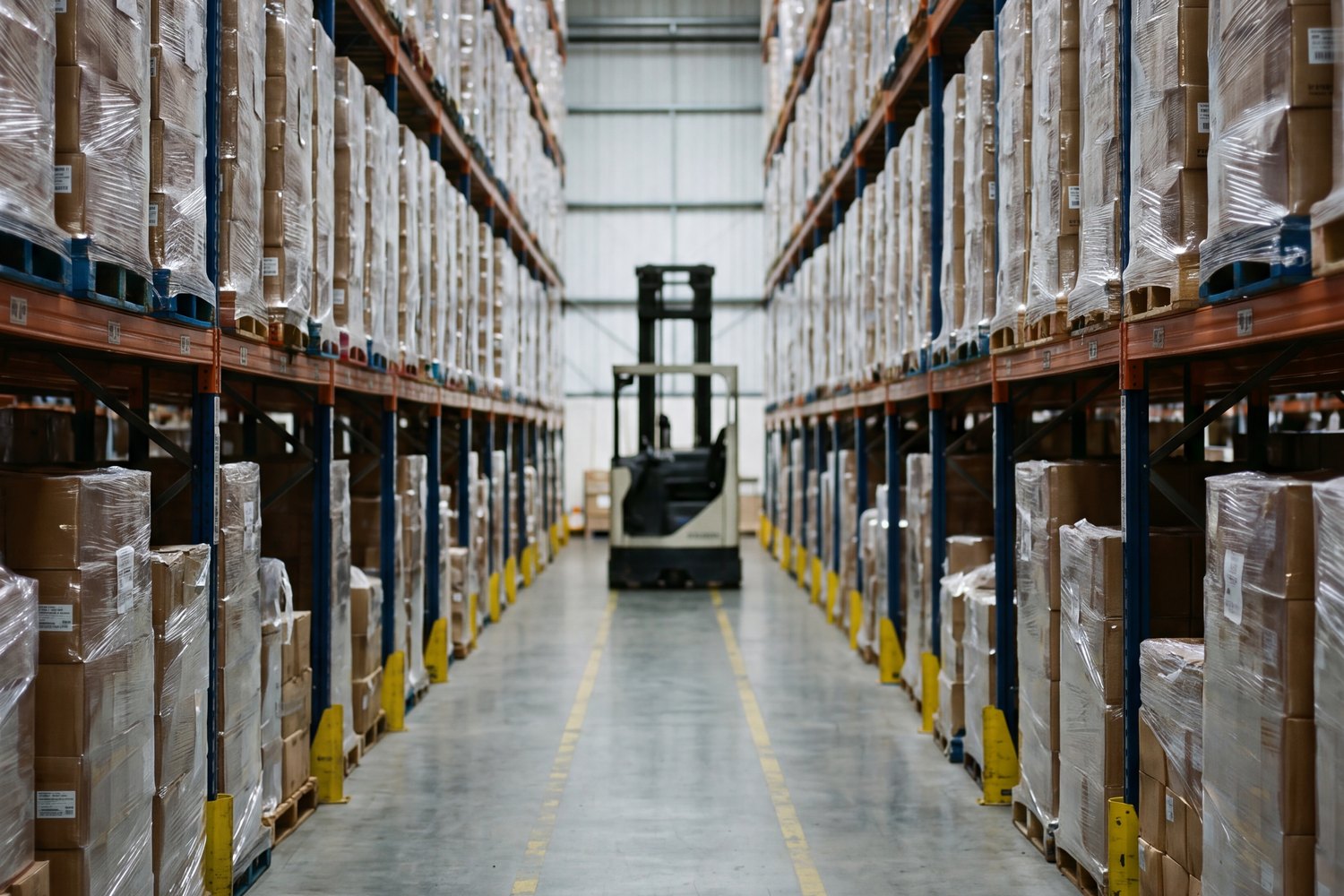
What one failed pallet really costs
The film is the smallest part of the bill.
| Cost | What it means for you |
|---|---|
| Damaged stock | Goods written off, or sold at a discount |
| Re-delivery | A second trip, a second driver and a second slot |
| Returns and credit notes | Paperwork, refunds and disputes with your customer |
| Labour | Hours spent restacking, rewrapping and checking loads |
| Missed delivery slots | Knock-on delays across your whole schedule |
| Your reputation | The delivery your customer remembers |
From one of our customers
“The grade of Fiber Film we use is ideal for our beer in glass bottles. We were able to significantly increase the tension without the film breaking because of the strength in the reinforcing fibres that run through the film.”
R. Hodgkins, Bottling Hall Manager
Questions we get asked
Why do pallet loads move in transit?
Braking, cornering and uneven roads push loads forwards and sideways. If the wrap doesn’t hold the load firmly and lock it to the pallet, it shifts, leans or collapses.
Who is responsible for load security?
Everyone involved. DVSA guidance says operators, drivers and companies sending goods (consignors) must secure all loads carried on vehicles, and make sure loads are transported, loaded and unloaded safely. Traffic Commissioners can take action against an operator’s licence if the systems to transport loads safely and securely aren’t in place. See GOV.UK.
What can an unstable load do on the road?
DVSA guidance says unsecured loads can affect a vehicle’s handling, increase its braking distance and raise the risk of a rollover. Items falling from a vehicle could hit other vehicles or pedestrians.
Can thinner film really hold my loads?
Often, yes: modern multi-layer and reinforced machine films such as Fiber Film are stronger for their weight. But not always, so we test on your own loads and only recommend a change that holds as well or better.
Do you work with the wrappers we already have?
Yes. We benchmark the film and settings on the machines you already run, and only suggest a new wrapper if it makes sense. If it does, INNOV8 wrappers are specified by the people who supply the film.
How is load stability measured?
The European reference test is EUMOS 40509, which measures how rigid a load unit is on an acceleration bench. On your site, we measure the practical signs: containment, film per pallet, rotations and how loads hold, before and after any change.
What does the benchmark cost?
Nothing. It’s free, with no obligation, and your trial order is sale-or-return.
Stop paying for pallets that fail.
Book a free benchmark and we’ll check how your loads are wrapped today, then prove the fix side by side.